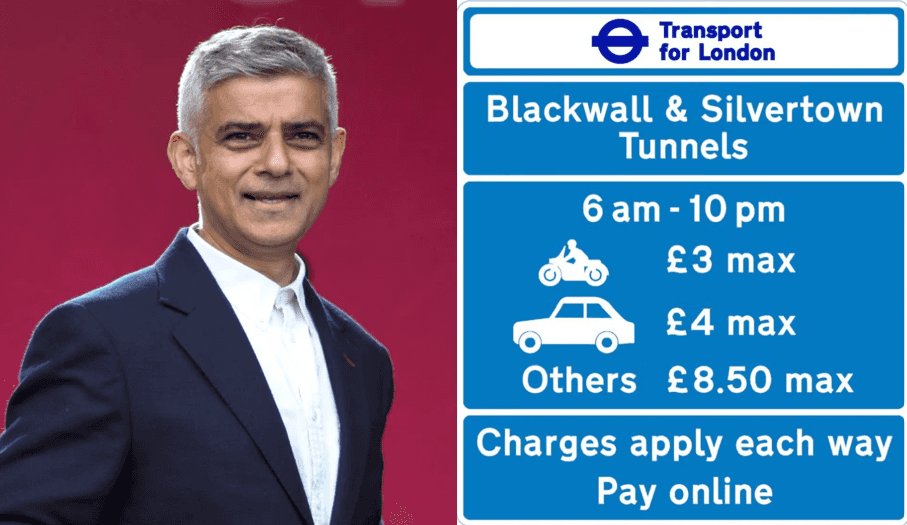
In what is shaping up to be a significant challenge for London's governance, Mayor Sadiq Khan has been embroiled in a heated controversy. Critics accuse him of leveraging a new toll system to address the financial woes of Transport for London (TfL) and unfairly targeting the city's drivers.
The storm of contention centers around two new tunnels in the capital. Allegations suggest that these infrastructure projects are less about traffic management and more about generating revenue to fill a gaping "black hole" in TfL's budget. City Hall's own research has projected an annual revenue boost of a staggering £123 million from these initiatives.
In a dramatic shift from tradition, motorists are expected to be charged for using both the historic Blackwall Tunnel, which had been free, and the newly constructed £2 billion Silvertown Tunnel, set to open its gates next year. Khan's proposal reportedly includes a toll for the Blackwall Tunnel at a steep £5.25, doubling to £10.50 for a return journey.
While Transport for London maintains that the final toll figures are yet to be decided, the overarching strategy seems clear: equal pricing for both tunnels to avoid skewed traffic distribution. This approach, however, has not gone unchallenged.
The London Conservatives have been vocal in their critique, accusing the Labour mayor of initiating a "war on motorists." This sentiment is echoed in the opposition's narrative, with a source close to Khan revealing that the Blackwall Tunnel toll was originally conceptualized by Boris Johnson.
Defending the toll plans, City Hall stated that the anticipated revenue for the first full financial year of operation was calculated at £123 million, including income from tolls and penalties. They assert that this income is vital to offset the construction and maintenance costs of the new tunnels, a project underwritten by the Riverlinx consortium.
Keith Prince, the transport spokesperson for City Hall Conservatives, is unwavering in his criticism: “Sadiq Khan is exploiting motorists to mitigate the £15 billion deficit in TfL finances. This year alone, road user charges including Ulez fees could cost motorists nearly £1 billion.”
The debate heats up with a source close to Khan branding the Conservatives' outcry as “utter hypocrisy,” emphasizing that no final decision on the charges has been made.
This development follows the controversial expansion of the Ultra Low Emission Zone last August, which drew widespread ire among motorists. The public response was marked by protests, with some even resorting to extreme measures against Ulez cameras.
A TfL spokesperson highlighted the rationale behind the tolls: “Our aim is to manage traffic effectively while reaping environmental and economic benefits. This plan, in the pipeline since 2012, fulfills our commitment to traffic level and environmental management as per government-approved planning consent.”
As London navigates this tumultuous chapter, the debate over balancing financial stability, environmental concerns, and public sentiment continues to rage, setting the stage for a pivotal moment in the city's approach to urban transportation and infrastructure financing.