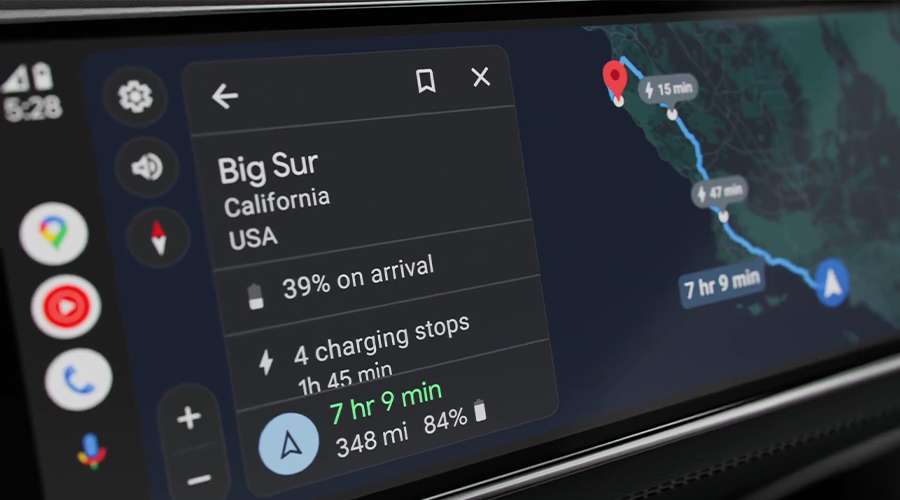
Android Auto is an extension of the Android platform which is highly optimized for use in a moving vehicle. The system is designed to cut down on the number of interactions you'll have with your smartphone so you can keep your eyes on the road.
You should always focus on the road when you’re driving a vehicle, but maps and music can make the journey better. That’s why phone-powered platforms have become a favorite for many car owners. Android Auto is Google’s offering for owners of Pixel, Samsung, and other popular smartphones. Here’s what you need to know about it.
What is Android Auto?
Google’s Android Auto platform isn’t its own operating system. Rather, it is an extension of a connected Android smartphone that can display some apps, entertainment, and mirror messages on a car’s dashboard. The platform was announced in 2014 with tie-ins to Google Calendar, Maps, and other products. The original design mirrored Google Now with cards for weather, appointments, and infotainment such as music controls.
Later, in 2019, Google revamped the design of Auto entirely with a focus on apps and shortcuts, as well as deeper reliance on Google Assistant.
The new design has since been updated to include a gallery of wallpaper options and powerful Google Assistant shortcuts that can be customized by the user for essentially any action, like opening the garage door, for example.
Android Auto is designed to help keep driver’s attention on the road rather than their smartphone. The platform limits users to just a handful of apps, primarily those used for media, such as Spotify, YouTube Music, and others. Mapping apps are also a core part of the platform, with Google Maps and Waze both offering apps. In 2021, Google opened up Android Auto to more third-party mapping apps, with Sygic and TomTom quick to offer their own apps.
Traditionally, Android Auto connects to your vehicle over a wired USB connection, but it can also be done wirelessly. You’ll first need an Android smartphone using Android 11 or higher (or a Pixel/Samsung device on Android 9 and up), as well as a vehicle that supports wireless Android Auto. If your vehicle only supports a wired connection, the third-party AAWireless dongle can be used to add that functionality to nearly any car.
The evolution of cars from mere transportation tools to advanced, connected technology hubs is accelerating rapidly. Android, a major player in this transformation, has recently announced exciting updates and partnerships at CES, significantly enhancing the driving experience with Android Auto and cars equipped with Google.
Navigating with Ease: The Electric Vehicle Revolution
The integration of Android Auto with electric vehicles is a game-changer. For instance, Ford's Mustang Mach-E and F-150 Lightning will soon share real-time battery information with Google Maps. This feature will provide drivers with crucial data like estimated battery levels upon arrival, charging stop suggestions, and charge duration estimates. This advancement is not only convenient but also crucial for the growing electric vehicle market, promising to simplify the driving experience.
Seamless Trip Planning
For cars with Google built-in, trip planning becomes more intuitive. You can now transfer your Google Maps trip plans from your Android or iOS phone directly to your car. This feature bridges the gap between planning and execution, ensuring a smooth transition from your phone to your vehicle.
Staying Connected and Entertained
The latest updates bring a plethora of apps to enhance your in-car experience. The introduction of the Chrome browser to select Polestar and Volvo cars (currently in beta) is a leap forward, allowing drivers to access the internet for shopping or browsing bookmarks while parked. Additionally, entertainment options expand with apps like PBS KIDS and Crunchyroll, ensuring passengers, especially children, are engaged during the journey.
Weather Updates at Your Fingertips
Understanding the importance of weather awareness during travel, The Weather Channel app is now available for cars with Google built-in. This app offers hourly forecasts, alerting features, and a "Trip View" radar, accessible directly from the dashboard. It ensures drivers are well-informed about weather conditions, enhancing safety and planning.
Looking Forward: Expanding Horizons
Android's journey in revolutionizing the automotive industry continues with new partnerships and expanding app ecosystems. Android Auto's compatibility with nearly every major car brand and its presence in over 200 million cars underscores its significant impact. The list of brands offering cars with Google built-in, including Nissan, Ford, Lincoln, and the anticipated addition of Porsche, is rapidly growing.
The Rise of Digital Car Keys
Another futuristic feature is the expansion of digital car key availability. This technology, rolling out to select Volvo cars and more brands in the future, allows you to lock, unlock, and start your car with compatible Android phones. It also facilitates secure key sharing with others, regardless of whether they use iOS or Android devices.
Experience the Future Now
If you're at CES, don't miss the chance to visit the Android booth for live demonstrations on the Ford Mustang Mach-E and the Polestar 3. For those who can't be there, the updates are showcased on the Android Auto and Google-built-in cars websites, or at a vehicle showroom near you.
Android's latest updates at CES represent a leap forward in making the driving experience more connected, safe, and enjoyable. These advancements highlight the continuous evolution of cars into smart, connected devices that do more than just transport us from one place to another. The integration of sophisticated navigation, entertainment, and security features points towards a future where our vehicles are as smart and connected as our homes and phones.