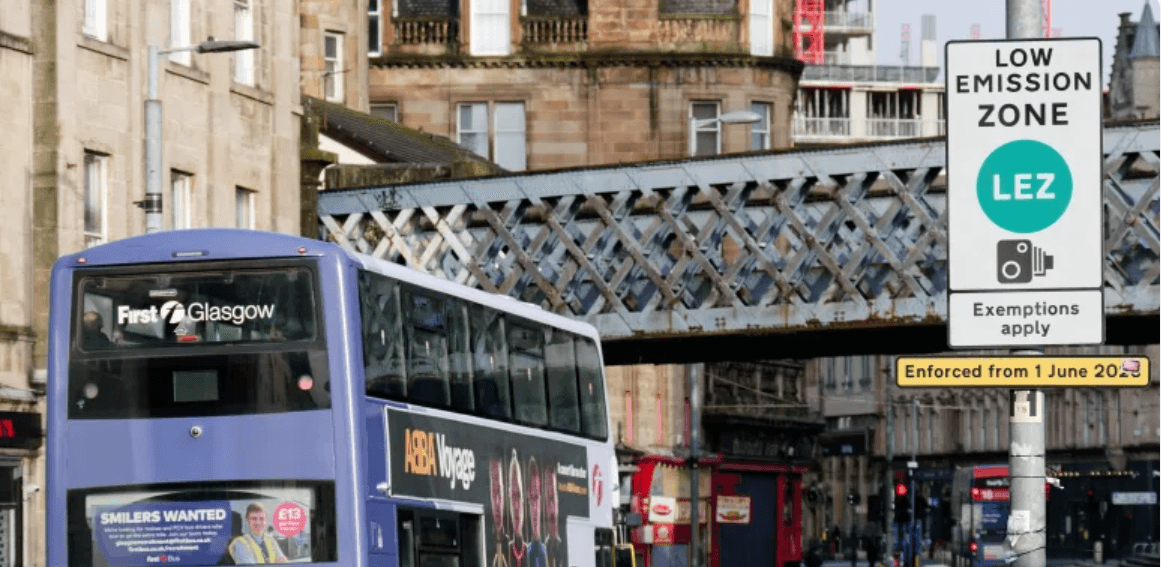
Despite Glasgow's controversial LEZ which came into effect on the 1st June 2023 banning older cars entering the city levels of nitrogen oxide and fine particulate matter in air have both increased.
Both these two pollutants are so fine they can travel into the respiratory track abd attach themselves to the lungs or, even worse, even enter the bloodstream.
According the reports in mainstream press today, Glasgow City Council have said that rise in these polutants may be down to the hot weather this summer.
Last year (June, July and August) in Hope Street, one of the monitoring stations levels of nitrogen dioxide showed an average of 31 micrograms per cubic meter whereas this year the figure has radically increased to 34 microgams. The other increase is more worrying with fine particulate matter inceasing from 5.2 to 58 micrograms per cubic meter.
Speaking under anonymity, an air quality expert said "Buses are the main pollutters hence the reason levels remain more or less the same. Given all the cost, disruption and inconvenience you need to question the point of banning cars."
In terms of buses the LEZ scheme came into effect from 2018 for them - strangely not one single pollution fine has ever been issued to a bus operator, despite the fact that 8,855 Penalty Charges were dished out to car, van and lorry drivers in June and July alone - bringing in nearly £600,000 for Glasgow City Council.